Customer Background
A metropolitan rapid transit operator manages daily transportation services through a central operations control center. Operators continuously monitor information from multiple systems, coordinate operational activities, and respond to unexpected events that may affect passenger safety or service continuity.
To support these responsibilities, the control room must present critical information clearly and make it available to the appropriate personnel when needed.
Project Requirements and Challenges
The control center receives visual information from multiple operator workstations.
When these sources are displayed separately, personnel may find it difficult to maintain a complete view of current operating conditions.
During an incident, operators also need to identify relevant information quickly and share it on the main video wall. A slow or complicated process for switching sources and adjusting layouts can delay communication and increase the workload on control room personnel.
The operator therefore required a solution that could:
- Display information from multiple workstations simultaneously
- Route selected sources to different areas of the video wall
- Adjust display layouts according to changing operational needs
- Provide stable video distribution for continuous control room operation
- Support future additions to the system without major infrastructure changes
Solution
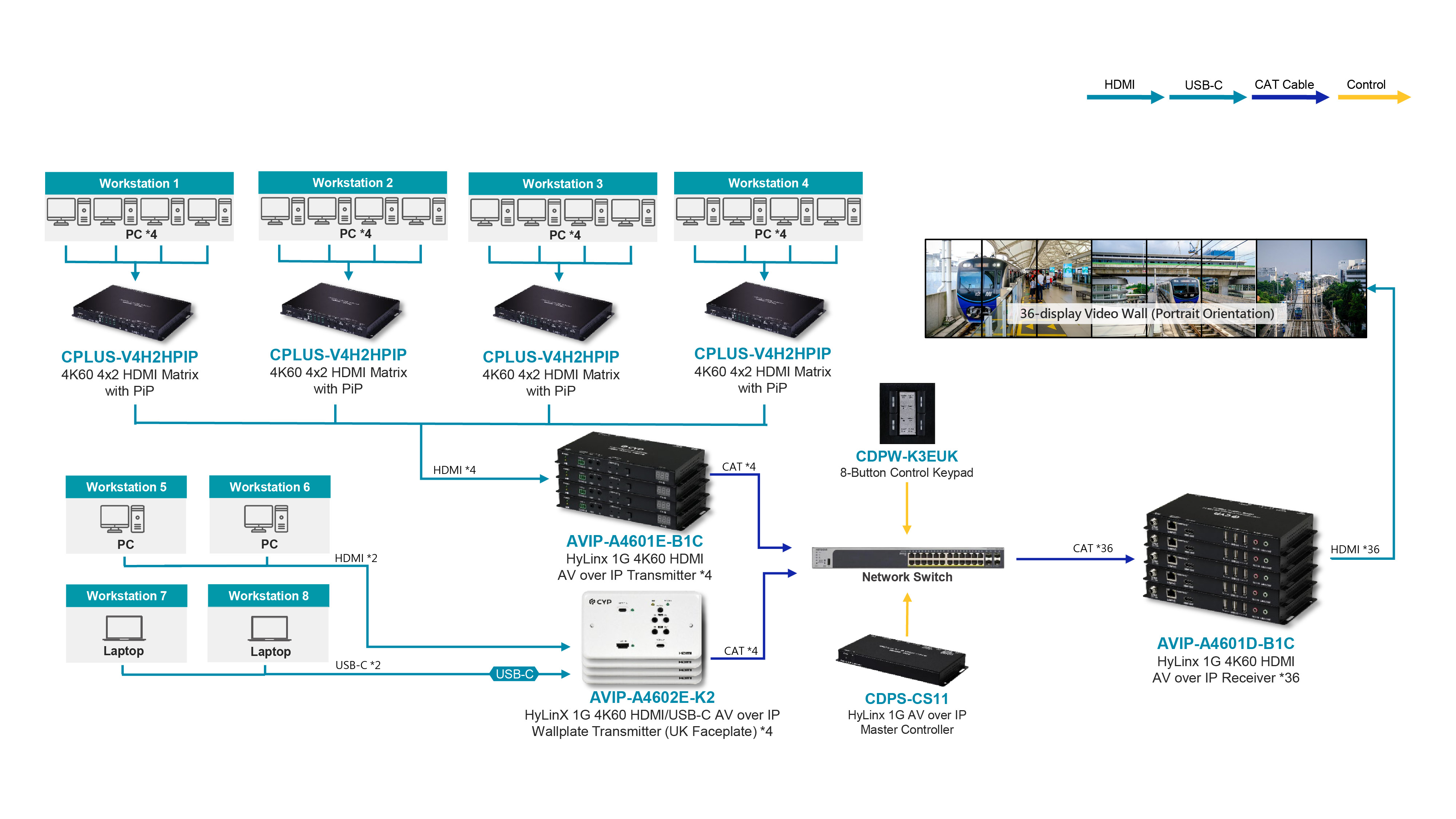
CYP deployed its HyLinX 1G AV over IP solution to transmit video from different operator workstations over the AV over IP network and distribute the selected content across a 36-display video wall.
Through a centralized management platform, authorized personnel can select workstation sources and route the required content to specific displays or areas of the video wall. As daily monitoring requirements or incident response priorities change, operators can quickly adjust the displayed content so that relevant information appears where it is needed.
The solution also incorporates a PiP multi-view processor that combines multiple workstation sources into a single multi-window display. It supports picture-in-picture, side-by-side, and quad-view layouts. The combined multi-view output can then be distributed through the AV over IP network to a designated area of the video wall, allowing operators to view related information together on one screen.
Frequently used routing configurations and display layouts can be saved as presets and recalled through a dedicated control keypad, reducing the number of steps required during daily operation. HDMI and USB-C inputs allow both fixed workstations and laptops to connect to the system. The IP-based architecture also supports future expansion when additional sources or display endpoints are required.
Solution Advantages
- Centralized video management and distribution - Operators can select, switch, and distribute video from different workstations through one management platform.
- Flexible visual information routing - Selected content can be quickly directed to a specific display or area of the video wall according to monitoring or incident response requirements.
- Integrated multi-source visualization - The PiP processor combines multiple sources into customizable multi-view layouts, allowing related information to appear together on one screen.
- Integration of AV over IP and multi-view processing - The multi-view output can be distributed through the AV over IP network to the required display location, combining flexible signal routing with multi-source visualization.
- Simplified daily operation - Preset layouts and direct keypad control make frequently used display arrangements easier to recall.
- Expandable system architecture - The IP-based design allows additional sources and display endpoints to be added without rebuilding the entire video distribution system.
User Benefits
- Faster understanding of overall operating conditions - Operators can view related information together in a multi-view layout, reducing the time spent switching between separate screens.
- Quicker access to incident information - When an incident occurs, relevant workstation content can be routed to the main video wall promptly, helping personnel focus on assessing the situation.
- Faster incident response and decision-making - Critical information can be displayed in the appropriate location according to operational priorities, helping operators coordinate the required response more quickly.
- Reduced operational workload - Centralized control, preset layouts, and keypad operation reduce repetitive source switching and manual display adjustments.
- Improved team coordination - Operators can use the same multi-view display as a shared visual reference, reducing gaps in communication and understanding.
- More consistent control room operation - Standardized display configurations help different operators and shifts use the system in a consistent manner.
- Greater adaptability over time - Additional workstations, information sources, and display devices can be added to the existing IP infrastructure as operational requirements evolve.
More Applications
- Situation Room
- Smart Manufacturing Situation Room
- Government Command Center
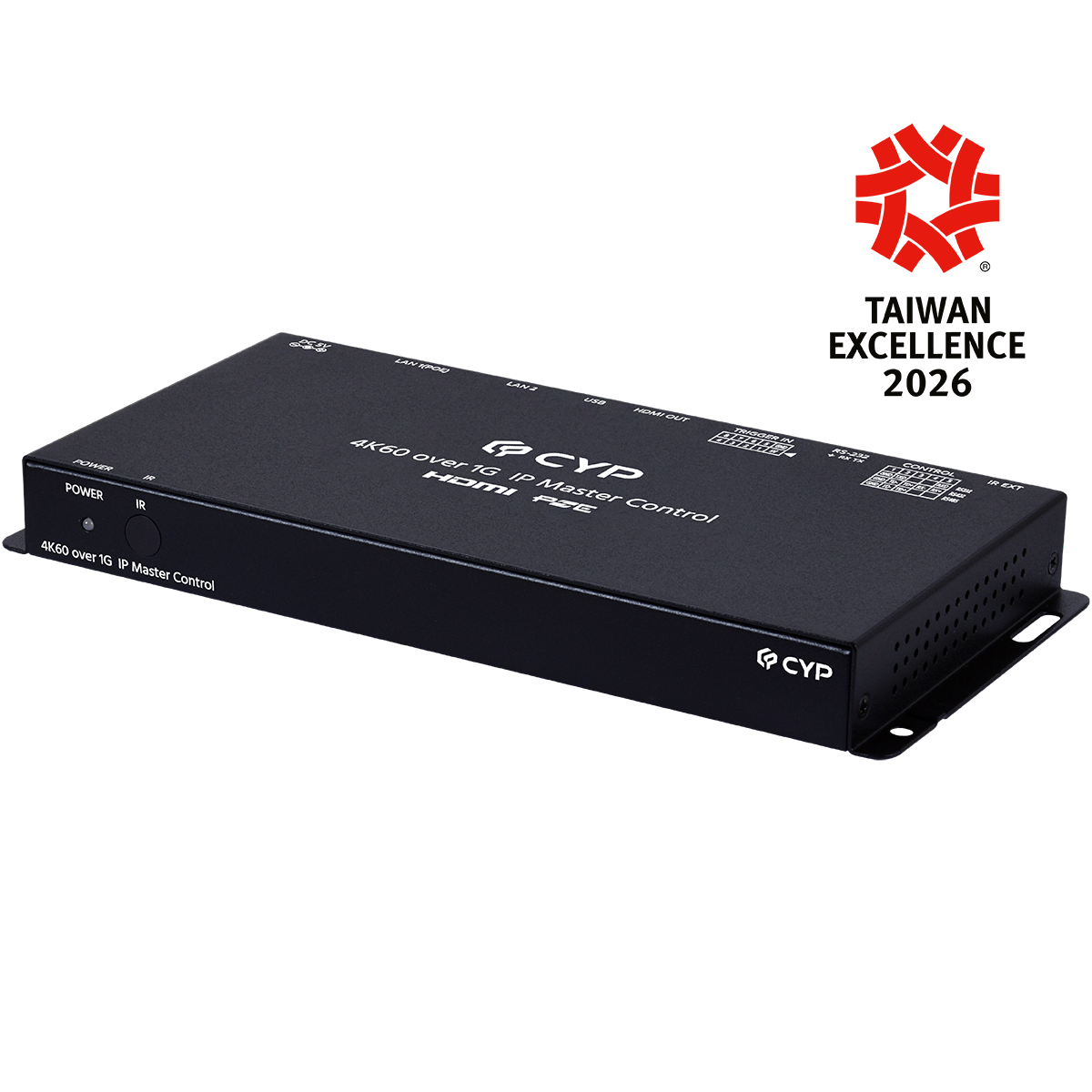
CDPS-CS11
4K60 over 1G IP Master Control
This controller is a powerful and flexible solution for controlling multiple Video over IP (VoIP) extenders within same network. The user only needs to install this unit into the same local network as the extenders (Transmitter and Receiver) to easily define and configure channel routing selections, for both unicast and multicast scenarios, using the WebGUI. It is also possible to define and switch routes using customized groups or presets allowing for easy control over multiple video zones. Without the use of this centralized unit, each individual Transmitter and Receiver in the system would need to be controlled and configured directly through their own individual WebGUIs.
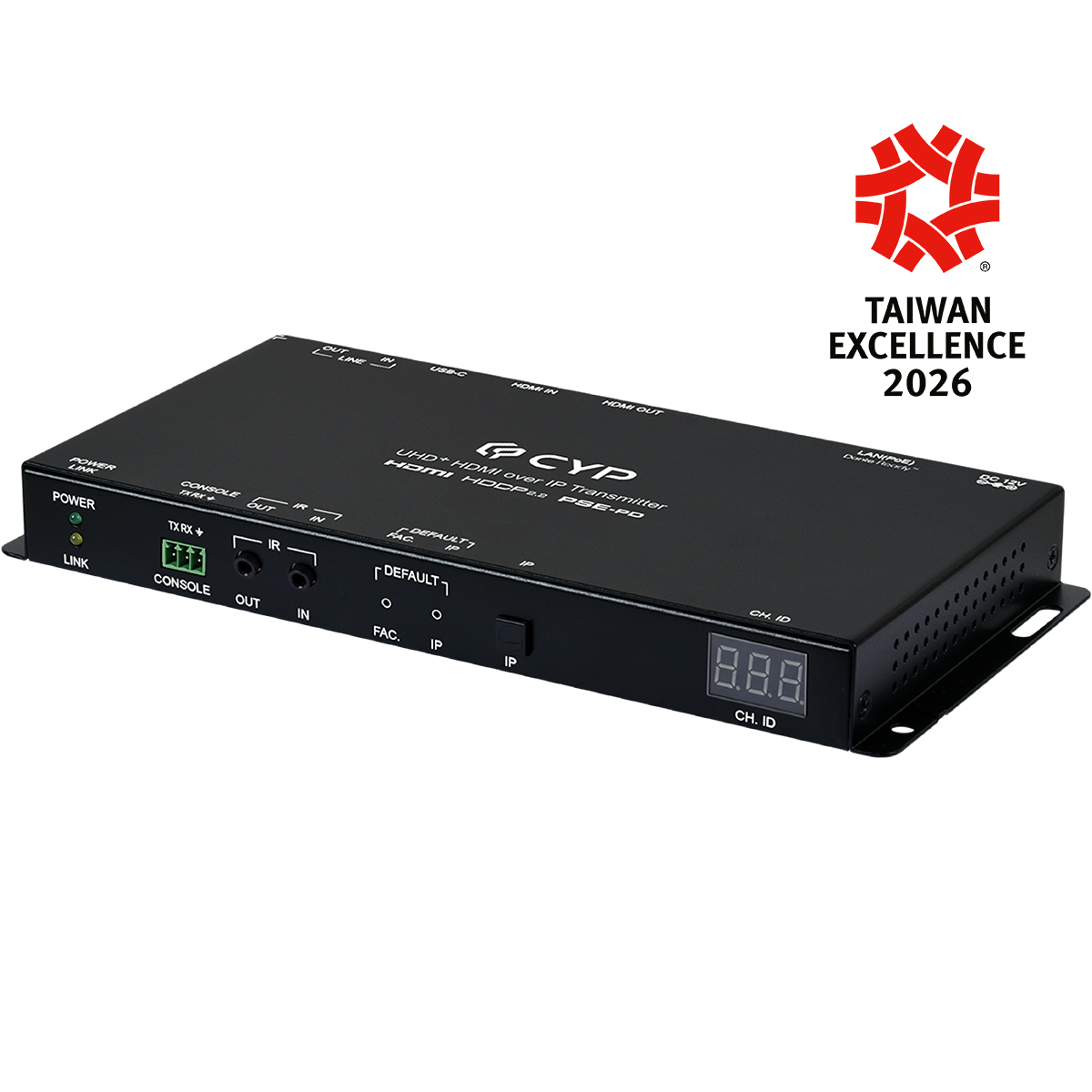
AVIP-A4601E-B1C
4K60 HDMI over IP Transmitter
This unit supports both Unicast and Multicast modes, enabling video wall and seamless collaboration across multiple windows in Multicast mode. It supports the transmission of Ultra High-Definition signals (up to 4K@60Hz RGB) with audio and USB 2.0 up to 100m on a single cable which allows connection of USB flash drives, keyboard, and mouse. The transmission distance can be further extended (up to 100m per segment) by using gigabit network switches, allowing the user to cascade the system without signal loss or introducing delay. Moreover, it supports IP to IR and IP to RS-232, converting the IP signal into IR and RS-232 commands for device control. When the extension system's units are in multicast mode, a single transmitter's AV signal can be sent to a large number of receivers within the same local network without the additional receivers causing the bandwidth requirements to increase. Additionally, that same multicast signal can be used to create large multi-display video walls with amazing simplicity. When combined with the optional IP Master Controller the functionality of the system expands exponentially. Its centralized web-based interface greatly simplifies control and management of large distributed video matrix or video wall systems adding to their flexibility in large home or commercial installations. This system also features bi-directional IR and RS-232 pass-through, analog line level in/out, and a microphone input (on the receiver), providing the user with a variety of audio options. The USB functionality allows the system to act like a remote USB hub which, when combined with the HDMI input/output feature, provides a comprehensive USB over IP functionality platform. Configuration information is provided via On Screen Display (OSD) and control is by WebGUI, IP Master Controller, and Telnet. The unit is with Dante Ready which can transmit digital audio channels upon activation and is compatible with any standard Dante audio transmitters/ receivers that the audio might be routed to. Dante Ready provides a flexible way to enable and expand the connectivity and interoperability of the world's de-facto AV-over-IP solution, even after the initial purchase. Upgrade your system with Dante and connect to over 4,000 products from 500 manufacturers. Dante Ready is built within the widely used Dante Controller application for Dante audio and video subscription management. Transactions are simple and secure, and device upgrades are seamlessly actioned without the need to enter complex license keys of copy license files. This unit supports both Unicast and Multicast modes, enabling video wall and seamless collaboration across multiple windows in Multicast mode. It supports the transmission of Ultra High-Definition signals (up to 4K@60Hz RGB) with audio and USB 2.0 up to 100m on a single cable which allows connection of USB flash drives, keyboard, and mouse. The transmission distance can be further extended (up to 100m per segment) by using gigabit network switches, allowing the user to cascade the system without signal loss or introducing delay. Moreover, it supports IP to IR and IP to RS-232, converting the IP signal into IR and RS-232 commands for device control.
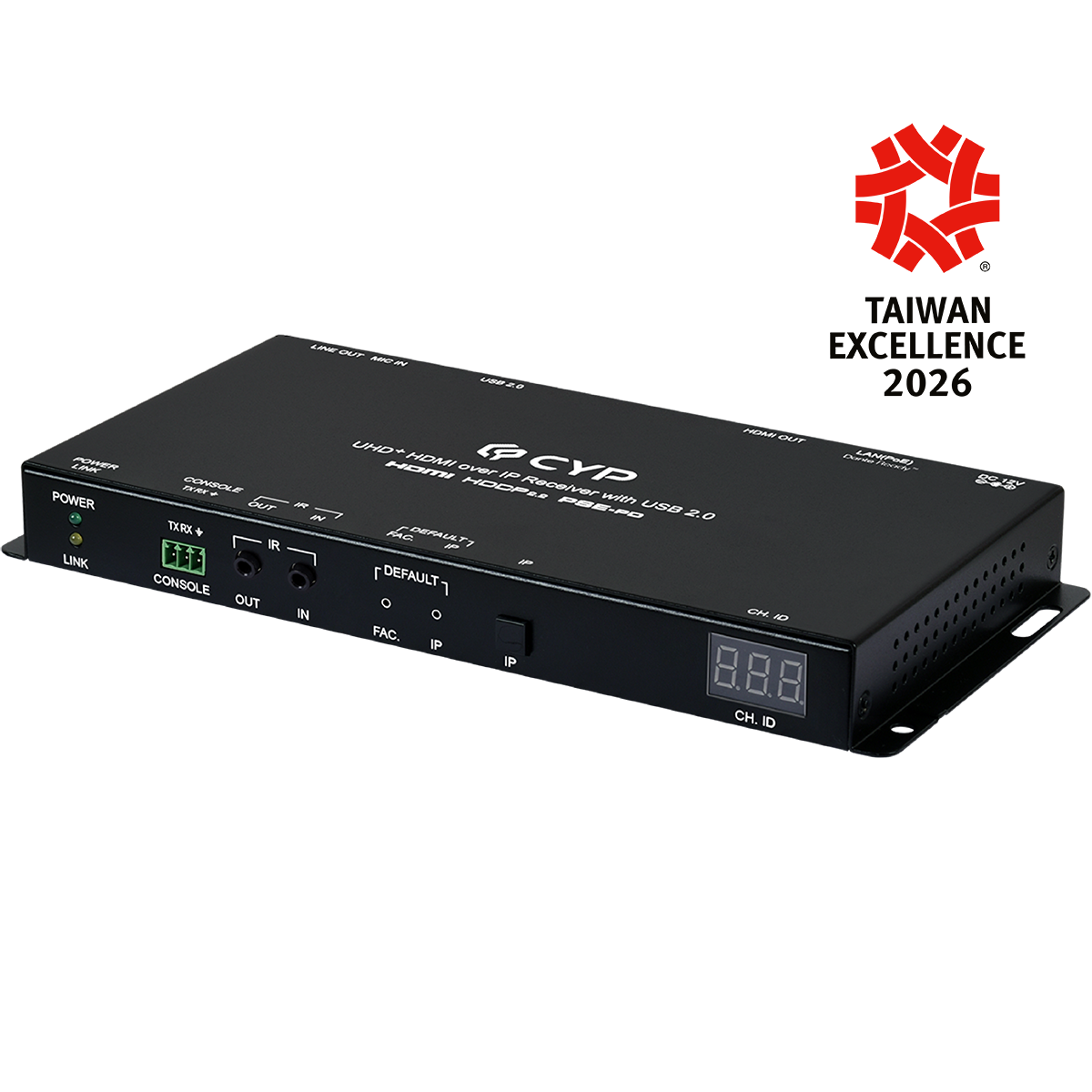
AVIP-A4601D-B1C
4K60 HDMI over IP Receiver with USB 2.0
This unit supports both Unicast and Multicast modes, enabling video wall and seamless collaboration across multiple windows in Multicast mode. It supports the transmission of Ultra High-Definition signals (up to 4K@60Hz RGB) with audio and USB 2.0 up to 100m on a single cable which allows connection of USB flash drives, keyboard, and mouse. The transmission distance can be further extended (up to 100m per segment) by using gigabit network switches, allowing the user to cascade the system without signal loss or introducing delay. Moreover, it supports IP to IR and IP to RS-232, converting the IP signal into IR and RS-232 commands for device control.
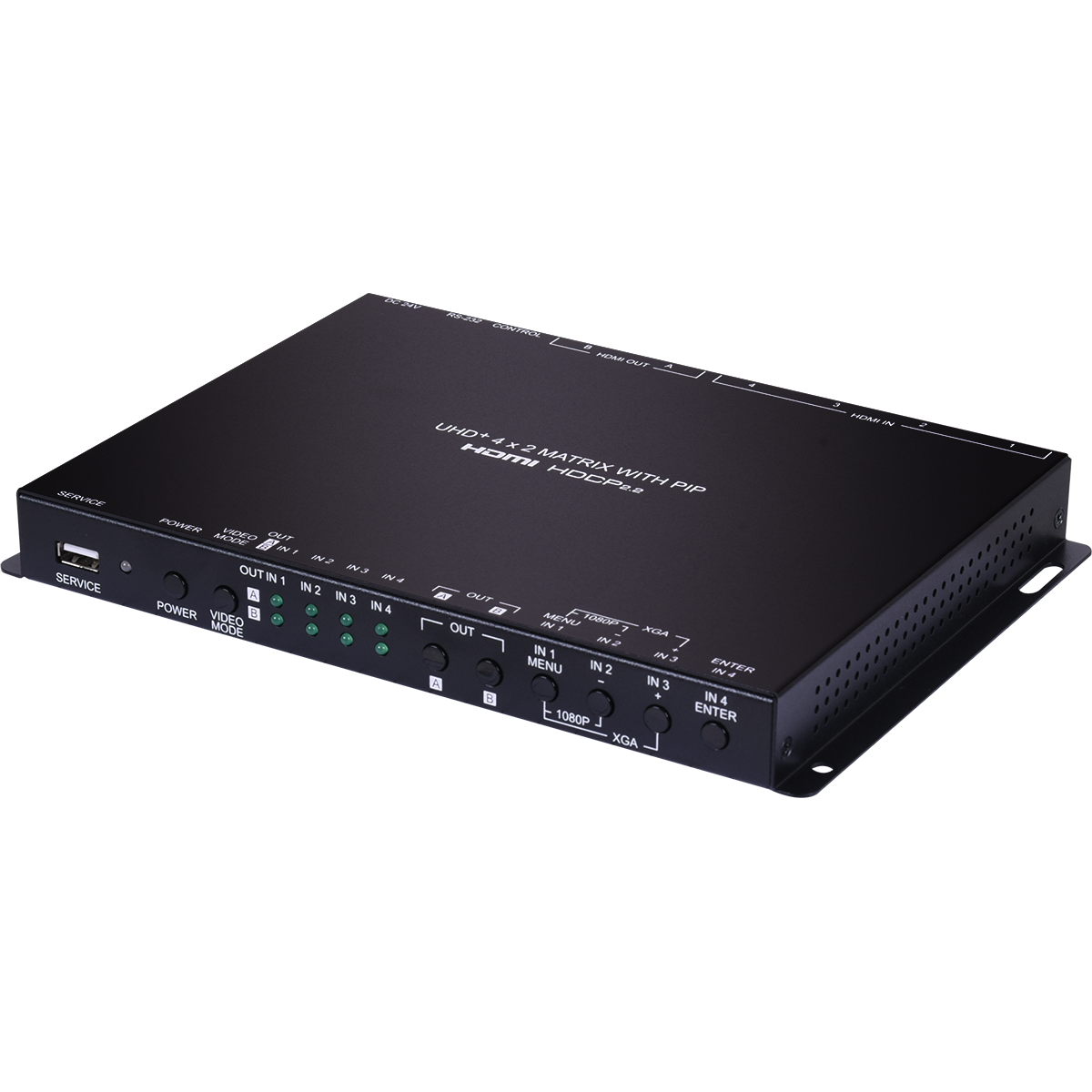
CPLUS-V4H2HPIP
UHD+ 4 x 2 HDMI Matrix with PiP
This 4 by 2 Matrix is a high performance HDMI switch with integrated scaling and multi-windowing technology. It is an ideal solution for monitoring or displaying multiple sources simultaneously for use in control rooms, conference rooms or classrooms. Video resolutions up to 4K@60Hz and LPCM audio up to 7.1 channels and 192kHz are supported on both input and