Customer Background
The National Company Law Appellate Tribunal (NCLAT), operational since 2016, is India's appellate authority established under the Companies Act and the Insolvency and Bankruptcy Code. It also hears appeals involving the Insolvency and Bankruptcy Board of India, the Competition Commission of India, and the National Financial Reporting Authority.
Project Requirements and Challenges
As part of the judiciary's
digital transformation, NCLAT introduced hybrid and virtual hearings, allowing
judges, lawyers, and other parties to participate either in person or remotely.
This transition also increased the court's need for real-time, stable AV
transmission and clear evidence presentation.
- Support for Hybrid and Virtual Hearings
Create an AV environment that supports both in-person and remote participation, enabling judges, lawyers, witnesses, and other relevant parties to take part in hearings in real time.
- Simultaneous Display of Multiple Video Sources
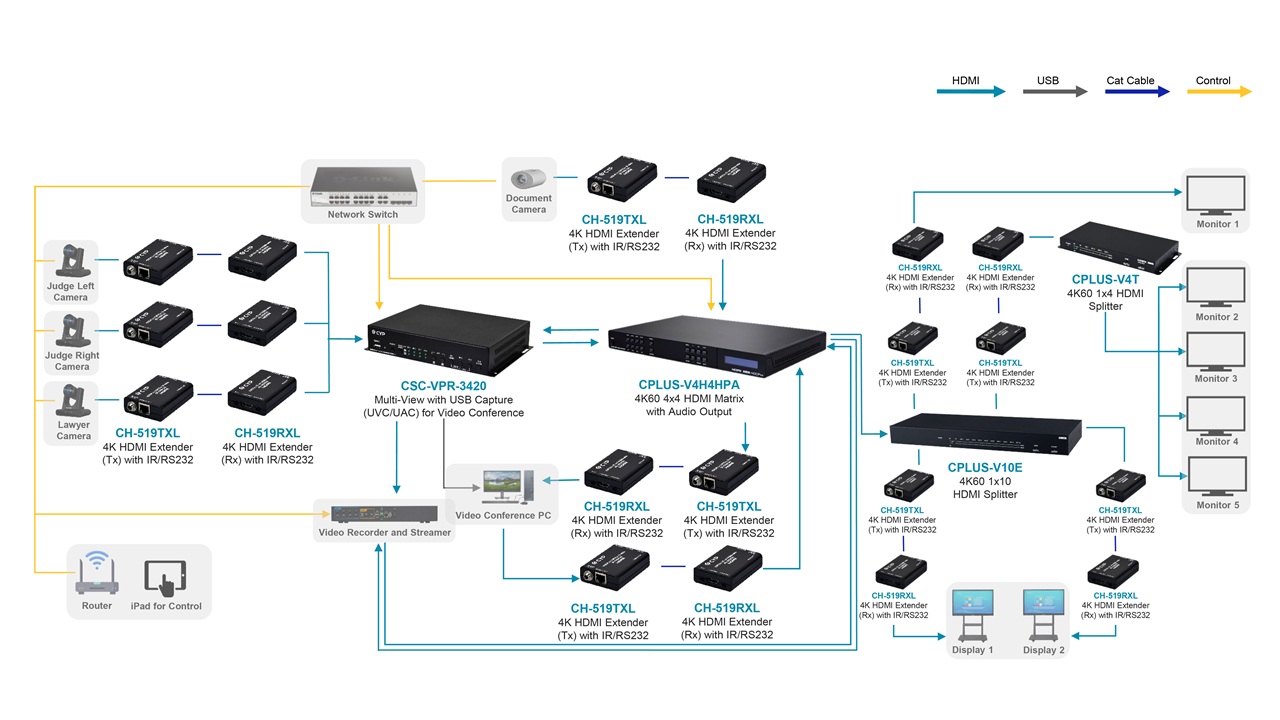
The court needed to display multiple video sources—including judges, lawyers, PTZ cameras, and document cameras—at the same time to provide a complete view of the courtroom and relevant evidence.
- Integration with Existing Courtroom Equipment
The new system needed to be compatible with existing PTZ cameras, document cameras, displays, and network equipment to reduce equipment replacement and system deployment costs.
- Real-Time, Stable AV Transmission
Different AV sources needed to be transmitted to designated displays in real time while maintaining clear, stable, and uninterrupted quality to ensure smooth hearing proceedings.
Solution
To meet NCLAT's hybrid hearing
requirements, CYP provided a complete AV integration solution comprising a
multi-view video processor, matrix switcher, HDMI splitters, and extenders.
The system combines multiple
video sources—including judges, lawyers, cameras, and document cameras—into a
multi-view layout on a single display. It can also flexibly route different
signals to designated displays according to the requirements of each hearing.
Through USB AV capture, the integrated content can also be transmitted to a video conferencing system, allowing remote participants to follow the proceedings in real time. The solution integrates with existing cameras, displays, and network equipment, enabling the court to upgrade to a hybrid courtroom AV system while retaining its existing infrastructure.
Solution Advantages
- Clear and Comprehensive Multi-View Display
Multi-view video processing displays judges, lawyers, and evidence sources simultaneously on a single screen, making it easier to monitor courtroom activity and compare relevant information.
- Stable and Reliable AV Transmission
Real-time, stable AV transmission reduces the risk of video interruptions or latency, helping both in-person and remote hearings proceed smoothly.
- Simple and Intuitive Source Switching
Operators can quickly switch and route AV sources, reducing complicated procedures and equipment adjustments during hearings.
- Flexible Equipment Integration and Expansion
The system integrates with existing PTZ cameras, document cameras, displays, and network infrastructure while retaining the flexibility to add more AV sources and displays in the future.
- Enables judges, lawyers, and other relevant parties to access complete AV and evidence information simultaneously, reducing the risk of missing important details.
- Allows remote witnesses and other relevant parties to participate in hearings in real time, improving flexibility and accessibility.
- Simplifies AV source switching and equipment operation, reducing operator workload and the risk of interruptions during hearings.
- Retains existing equipment, reducing replacement, system modification, and ongoing maintenance costs.
User Benefits
More Applications
- Large Conference Halls
- Command and Control Centers
- Smart Factory Control Rooms
CSC-VPR-3420
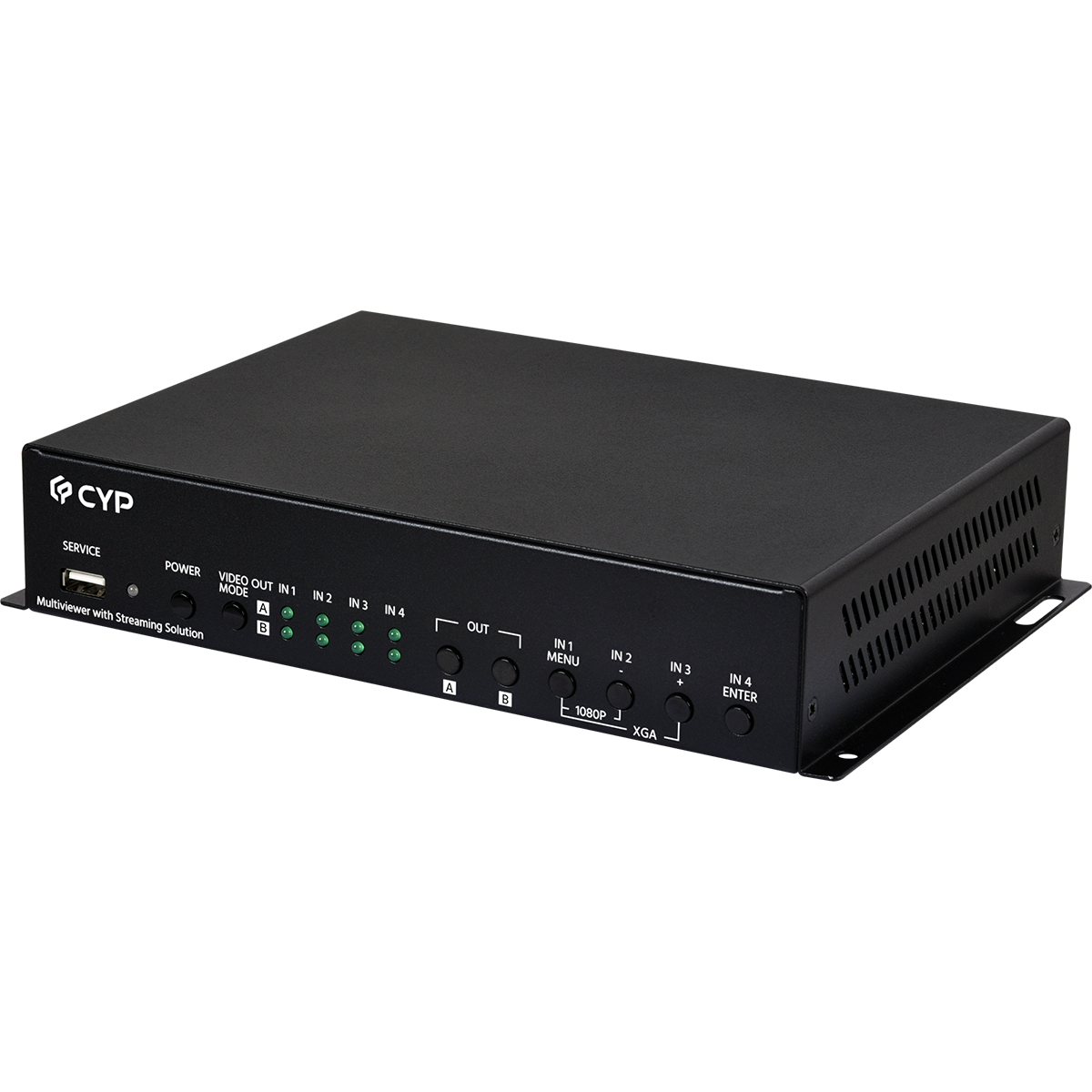
Multi-View with Streaming Solution for Video Conference
Video conference is important and convenient to communicate with people in distance. If you want to express your thought clearly by sharing varied and rich images, an integrated machine with multi-view and video capture functions is a splendid idea. CSC-VPR-3420 is the one to meet your requirement. Besides high performance HDMI switch with integrated scaling, multi-windowing technology, multi-view and video capture function are also supported. Any of the 4 different HDMI sources may be displayed individually, full screen, or they can be displayed using a variety of multi-window modes including quad mode, PiP , and PoP mode. Using an HDMI cable to connect between HDMI out indicated as capture and the HDMI input above it. The HDMI input supports resolutions up to 18Gbps (600MHz) 4K UHD with HDR (via the bypass path) while simultaneously streaming the audio and video signal at 1080p to a USB connected PC for capture or re-broadcast. It supports most common video capture, chat, or streaming software, including free OBS (Open Broadcaster Software) streaming software which is available for Windows PC, macOS and Linux. In this product, the video capture is powered directly by the USB 3.0 port, not from the DC 24V power source. (A Y-cable is required when connected via USB 2.0 in order to deliver the necessary power). Availability and access to the controllable features of the unit depend on the capture software used.
CPLUS-V4H4HPA
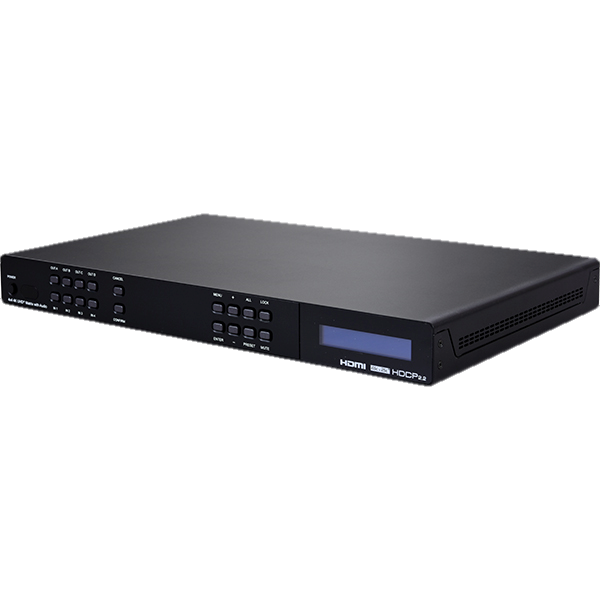
UHD+ 4x4 Matrix with Audio Output
This 4K UHD 4 by 4 Matrix provides the ability to connect up to four 4K UHD HDMI sources to up to four 4K UHD HDMI displays and freely switch between them. This unit comes with full support for 18Gbps (600Mhz) resolutions up to, and including 4K@60Hz (4:4:4, 8-bit) as well as support for 16-bit Deep Color, HDR (High Dynamic Range), HD audio and other features defined by the HDMI 2.0 specification. With a comprehensive EDID management feature that includes the ability to select between built in default EDID, EDID copied from connected sink devices, as well as a configurable EDID, this matrix can solve many interconnectivity problems. The built in OSD has the ability to display user editable general information text so each output can display up to 2 lines of customized text on top of the video source in the color of your choice. This unit provides an intuitive set of front panel controls with an OSD as well as RS-232, telnet, WebGUI, and IR remote control options.
CH-519TXL
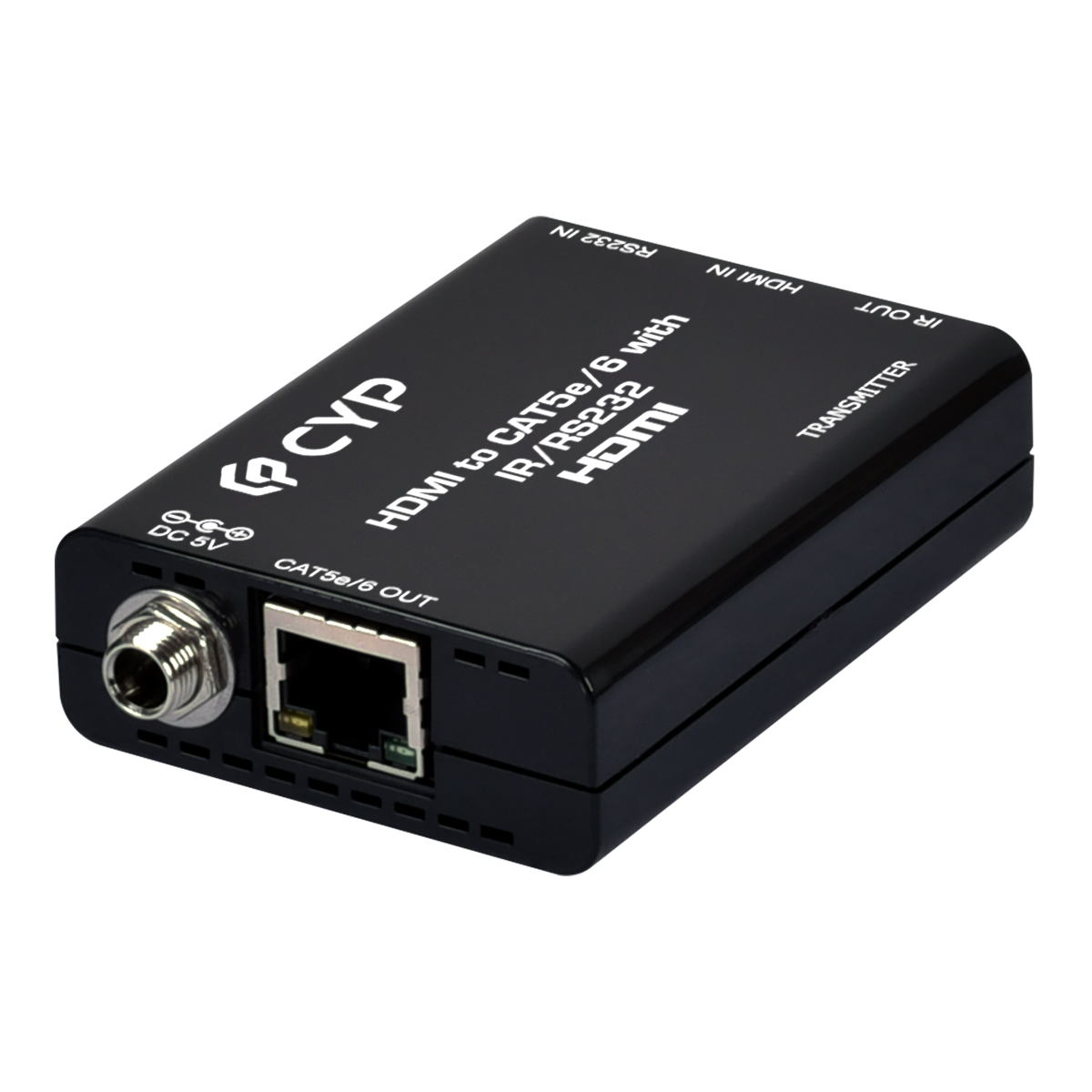
HDMI to CAT5e/6 with IR/RS232 (4K@60 420 up to 40M)
This HDMI over single Cat.5e/6/7 transmitter is a great solution for extending uncompressed HD audio and video as well as control via a single run of Cat.5e/6/7 cable over distances of up to 70 meters. Multiple data and control interfaces are provided, including IR and RS-232 connections. This extender complies with the advanced HDCP 2.2 and HDMI 2.0 standards, as well as supporting the legacy HDCP 1.x and HDMI 1.x standards. The transmitter is powered locally and require no manual controls for setup or operation.
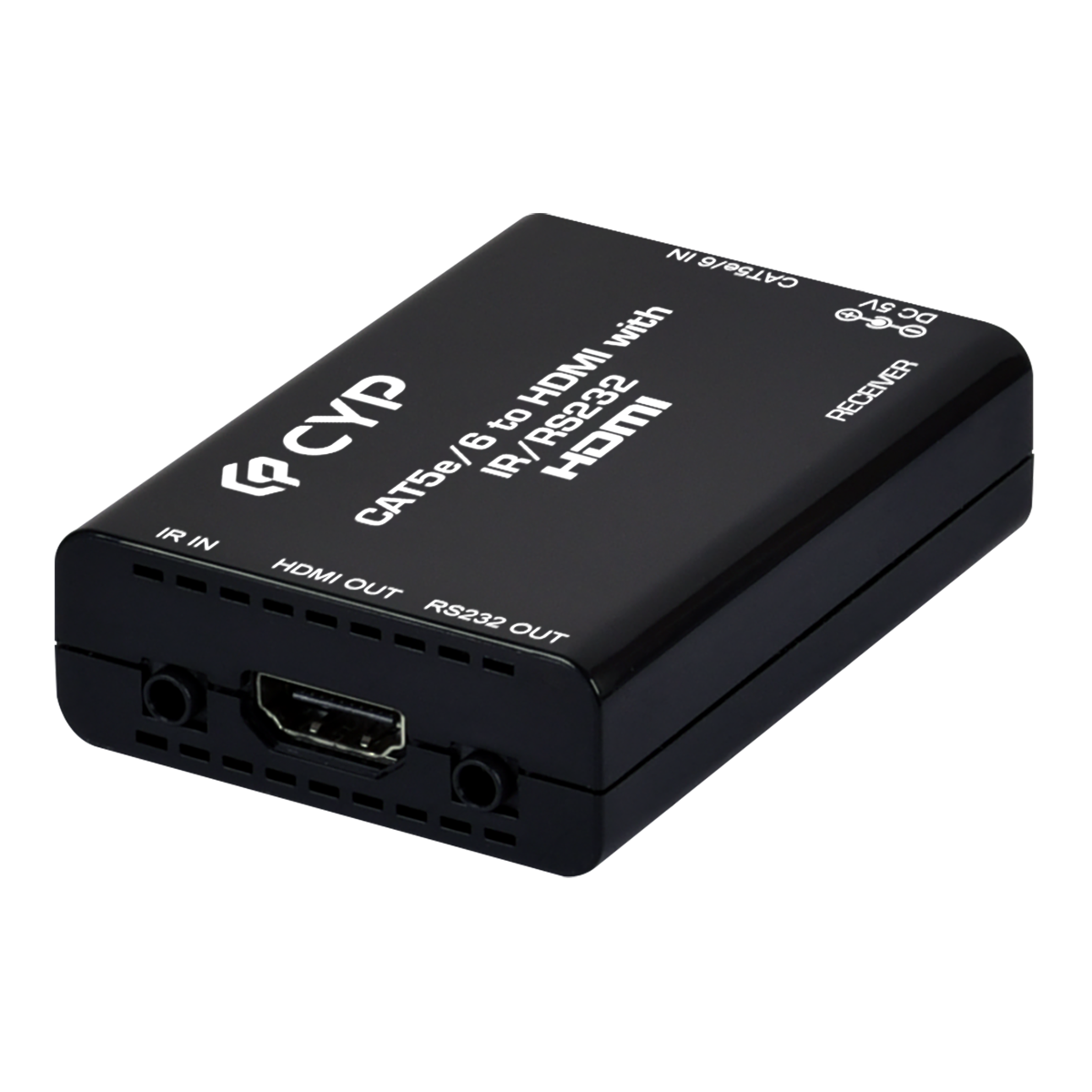
CH-519RXL
CAT5e/6 to HDMI with IR/RS232 (4K@60 420 up to 40M)
This HDMI over single Cat.5e/6/7 receiver is a great solution for extending uncompressed HD audio and video and control via a single run of Cat.5e/6/7 cable over distances of up to 70 meters. Multiple data and control interfaces are provided, including IR and RS-232 connections. This extender complies with the advanced HDCP 2.2 and HDMI 2.0 standards, as well as supporting the legacy HDCP 1.x and HDMI 1.x standards. The receiver is powered locally and require no manual controls for setup or operation.
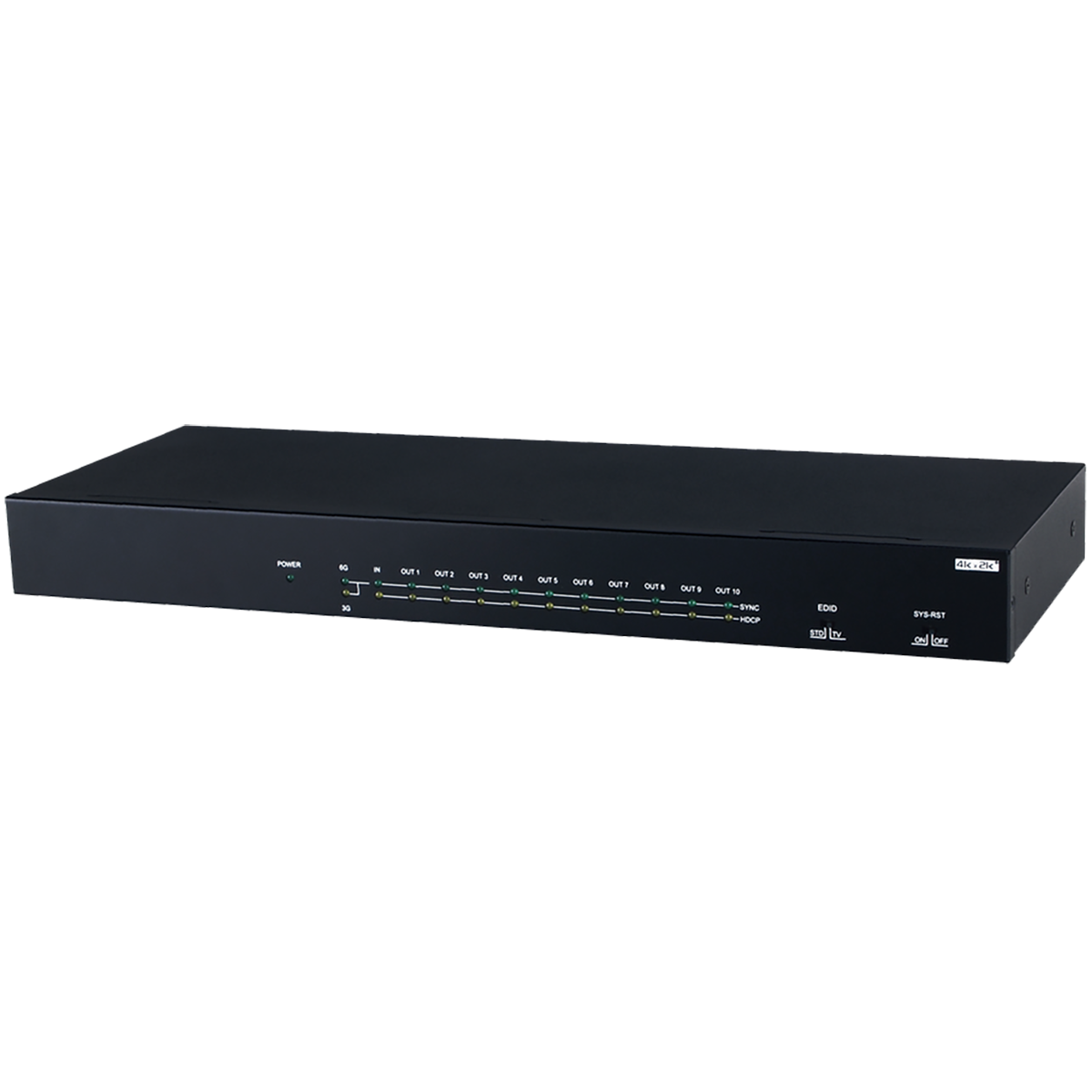
CPLUS-V10E
1 by 10 6G HDMI Splitter
The 1 by 10 HDMI Splitter with HDCP 2.2 is an advanced solution for splitting a single HDMI input to 10 HDMI outputs. It provides high performance audio and video output up to 4K2K@60Hz (YUV444) resolution and is capable of provide high end of audio and video performance. This unit also support HDR (High Dynamic Range Imaging) function, which allows giving more luminance radiance contrasting and colourful pictures for better experience. It supports high resolution digital audio formats such as LPCM 7.1CH, Bitstream, HD Bitstream, audio sampling rate up to 192kHz. There are input and outputs indications on panel, which will illuminate when detected, system reset function allows the unit to set the TV to it’s default HDMI input.
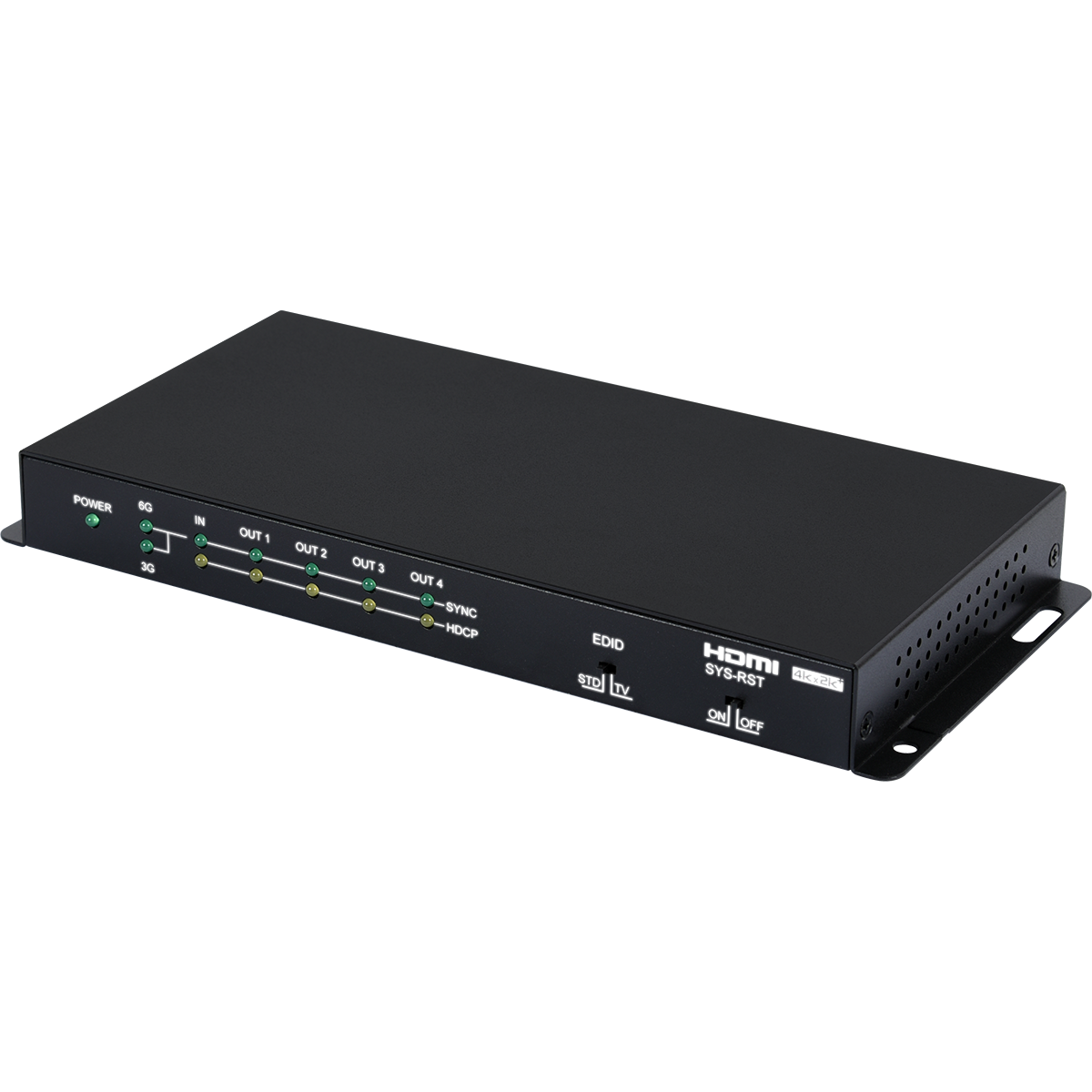
CPLUS-V4T
UHD+ 1x4 HDMI Splitter
This 4K UHD HDMI Splitter with HDCP 2.2 is an advanced solution providing high performance audio and video support including HDR and other features defined by the HDMI 2.0a specification. 4K UHD HDMI video sources, up to and including 4K@60Hz (4:4:4, 8-bit) as well as 10/12-bit sources with HDR, are able to be passed along to 4 outputs. Pass-through of multiple digital audio formats such as LPCM 7.1, Bitstream and advanced HD Bitstream with audio sampling rates up to 192kHz are also supported. An independent HDCP management engine for each output ensures stable HDCP performance. When a mixture of displays with different specifications are connected, each output will automatically scale 4K to 1080p or apply color space conversion (4:4:4 to 4:2:0), as appropriate, based on each connected display’s EDID. Support for the CEC “active source” command to periodically reset input selection on CEC-compatible connected displays is also included. This unit is controllable via simple front-panel switches with easy to read informational LEDs.